10 Easy One Pan Salmon Recipes for Quick Dinners
Busy weeknights call for meals that feel fresh without creating extra work. This collection shows you how to build a fast dinner with tender fish, colorful vegetables, hearty potatoes, bright lemon, garlic, and fresh herbs.
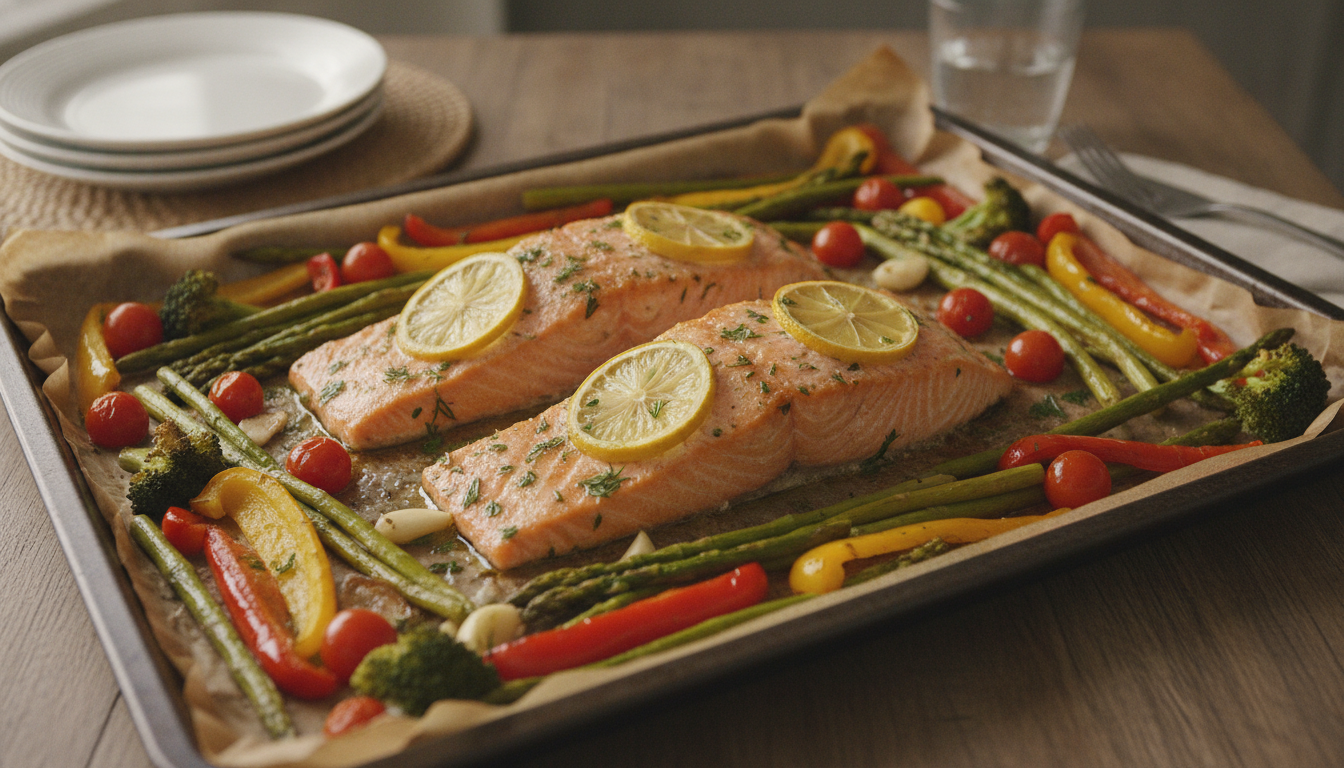
Azlin Bloor calls salmon her favorite fish, and her simple dish shows why it works so well for home cooks. You need about 10 minutes of prep and 10 minutes in the oven. In roughly 20 minutes, you can serve a complete meal for two using two salmon fillets.
Simple organization makes the biggest difference. Arrange each ingredient for even cooking, choose a suitable baking temperature, and keep cleanup easy. You will also find Asian-inspired sauces, storage tips, serving ideas, and smart ways to use leftovers the next day.
Whether you cook for a small household or a larger group, these flexible ideas help you get dinner on the table with less effort.
Key Takeaways
- Prepare a complete dinner in about 20 minutes.
- Use vegetables, potatoes, citrus, garlic, and herbs for variety.
- Follow clear oven timing and simple tray organization.
- Adjust portions for different schedules and appetites.
- Store extra fish safely for a quick next-day meal.
Why one pan salmon recipes are ideal for quick dinners
Smart kitchen choices can turn a rushed evening into a fresh, satisfying dinner. A single sheet pan keeps ingredients together, limits dishes, and helps you serve food with less effort. A simple sauce adds flavor without slowing the process.
Fast prep and minimal cleanup
With even spacing, your ingredients cook at the same pace. The second source combines fish, carrots, and broccoli in about 20 minutes. Afterward, you usually need only one tray and a few utensils to wash.
Balanced meals with protein and vegetables
A meal built around two fillets serves two people and provides 310 calories, 37 grams of protein, 11 grams of fat, and 5 grams of fiber per serving. Vegetables bring color, texture, and lasting fullness.
You can add rice, noodles, or another side when you want more energy. Keep the oven steady, spread the ingredients across the sheet, and enjoy a reliable cooking method. Rachel made the dish many times and called it “outrageously good,” showing that fast food can still feel special.
Essential ingredients for flavorful salmon dinners
Build a balanced meal with fresh salmon, colorful vegetables, oil, salt, pepper, garlic, ginger, and citrus. Choose firm fillets with a clean scent. Olive oil helps the fish brown, while lemon adds a bright finish with little effort.
A flavorful Asian-style recipe uses 100 grams each of white cabbage and tenderstem broccoli. Add a large garlic clove, 2.5 centimeters of ginger, 1 tablespoon of light soy sauce, half a tablespoon of oyster sauce, and juice from half a lemon. This simple sauce creates rich flavor in a short time.
For another recipe, whisk brown sugar, sesame oil, tamari or soy sauce, ginger, garlic, and cilantro. A Dijon and mayonnaise topping offers a creamy contrast. Use fresh-looking fillets, including Sockeye, for the best texture.
- Try asparagus, zucchini, cauliflower, onions, green beans, kale, bell peppers, cabbage, or broccoli.
- Add potatoes when you want a heartier pan meal and a filling side.
- Check sodium levels, since the listed meal contains 1,024 milligrams per serving.
This sheet pan approach also provides 37 grams of protein and 5 grams of fiber per serving.
One pan salmon recipes with fresh vegetables
Fresh vegetables bring color, texture, and balance to a quick fish dinner. Keep the cuts similar in size so carrots, broccoli, zucchini, peppers, and asparagus finish at nearly the same time. A large sheet gives each ingredient room to brown.
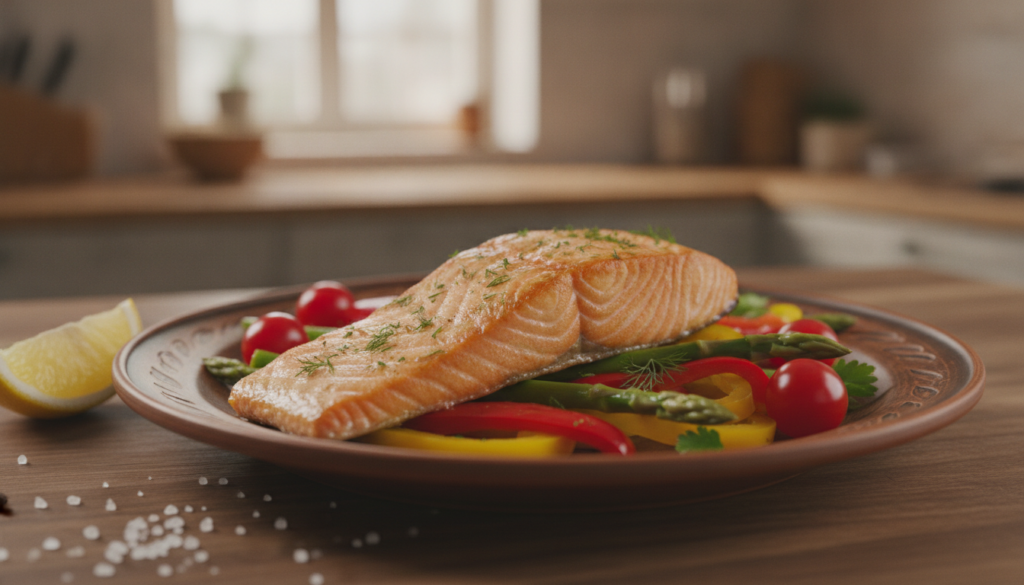
Garlic Lemon Salmon with Asparagus
Warm olive oil with garlic and ginger for 30 seconds. Add the vegetables and cook for 3 minutes. Place the salmon fillet beside them, then cook for 2 minutes. Turn the fish and finish for 3–5 minutes. Add lemon, salt, and pepper for a bright flavor.
Asian-Inspired Fish with Carrots and Broccoli
Whisk soy sauce, brown sugar, ginger, garlic, sesame oil, and cilantro into a savory sauce. Roast the fish, carrots, and broccoli at 400°F for 12–15 minutes. Even cuts help the meal cook well.
Fish with Zucchini, Peppers, and Tomatoes
For a softer summer mix, replace cabbage and chilies with zucchini, bell peppers, and tomatoes. Avoid crowding, though vegetables may overlap after the fish is added. Use the recipe card for exact amounts, then adjust seasonal veggies to suit your meal.
Sheet pan salmon with potatoes and hearty sides
A crisp potato base gives your dinner more substance without adding much work. For a reliable meal, preheat oven to 450°F. Toss 24 ounces of Yukon baby gold potatoes with olive oil, salt, garlic, and your preferred seasoning. Roast them on a sheet for 30 minutes.
Stir the potatoes every 10–15 minutes. This spreads the oil, moisture, and heat, which helps create tender centers and golden edges. When the potatoes show color, place salmon in the center of the sheet pan. Skin-on fillets stay intact while the vegetables finish cooking.
How to cook potatoes evenly with salmon
Bake the fish for 6 minutes, then broil for 2–3 minutes. Watch closely as the topping browns. A mix of 3 tablespoons Dijon, 2 tablespoons mayonnaise, and 1½ teaspoons kosher salt makes a quick sauce.
The full cooking time reaches about 40 minutes. For variety, use thinly sliced or preboiled potatoes, rice, noodles, or cauliflower rice as a hearty side. Add seasonal veggies for color and texture.
Simple sauces, seasonings, and toppings for salmon
A well-chosen finishing touch can shift the entire mood of your dinner. Start with a light soy and oyster sauce, then add ginger, garlic, lemon juice, black pepper, and a small splash of sesame or chili oil. This blend suits a sheet pan meal and takes minutes to mix.
For a sweeter Asian-style option, combine brown sugar with tamari, sesame oil, ginger, and cilantro. The sugar softens salty notes without requiring a long simmer. Add the sauce near the end so it coats the fish without burning.
- Creamy topping: Stir Dijon with mayonnaise for a rich crust.
- Herb butter: Mix melted butter, grated garlic, and dill for potatoes or asparagus.
- Bright finish: Add lemon and red pepper flakes after cooking.
- Heat control: Measure chili oil carefully, while olive oil keeps the dish light.
Use cilantro for a fresh, lively flavor and dill for a softer herb note. The same recipe can taste bold, creamy, or bright with small changes. Finish your salmon in the oven, then serve the sauce on the side for easy control.
How to prepare and cook salmon in one pan
Good results start with fresh fish and a clear cooking plan. Choose firm, fresh-looking fillets with a clean scent. Sockeye offers a flavorful option. For responsible purchases, check Monterey Bay Aquarium Seafood Watch.
Choosing fillets and preparing the pan
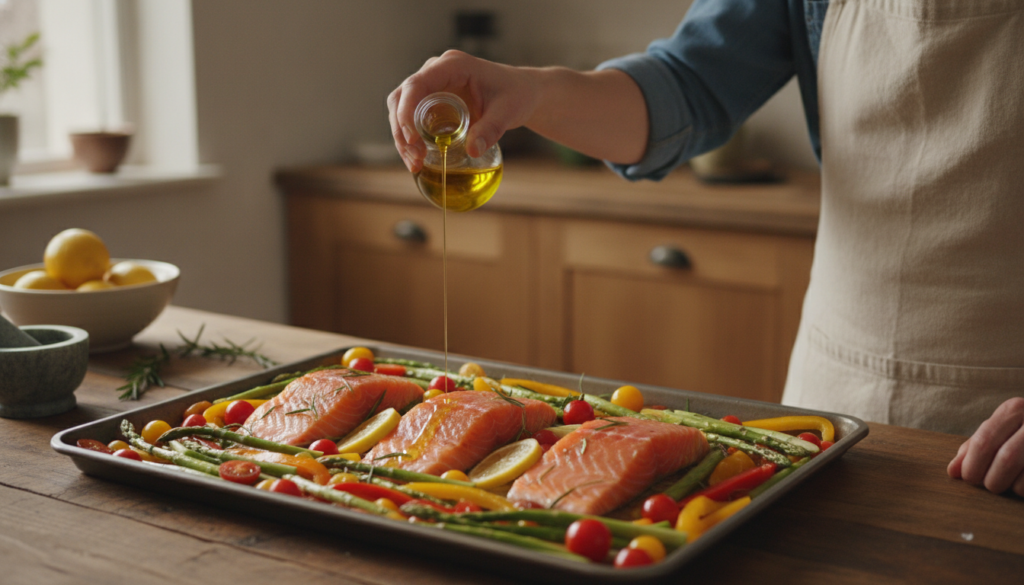
Line a large sheet with parchment or a thin layer of oil. Arrange vegetables, such as asparagus or potatoes, in a single layer. Leave an open space, then place salmon there. Season with salt, pepper, garlic, and your preferred sauce.
Using oven temperature and cooking time for tender fish
Follow the recipe card and its prep time. For an oven method, preheat oven to 400°F and cook for 12–15 minutes. Another approach uses 450°F for 6 minutes, then broils for 2–3 minutes. Stovetop cooking takes 2 minutes skin-side up, followed by 3–5 minutes skin-side down.
Check the thickest part. The flesh should look pale pink, flake easily, and stay juicy. The USDA-aligned safety mark is 145°F. Some cooks prefer 125°F to 145°F, so use a thermometer. Add lemon after cooking for a fresh finish.
| Method | Heat | Timing |
|---|---|---|
| Oven roast | 400°F | 12–15 minutes |
| Bake and broil | 450°F | 6 minutes plus 2–3 minutes |
| Stovetop | Medium heat | 2 minutes plus 3–5 minutes |
Healthy serving ideas for a complete salmon meal
Choose sides that match your appetite and keep your plate colorful. A sheet pan dinner with salmon fillets, vegetables, and a smart starch offers a balanced meal with little extra work.
This recipe provides about 37 grams of protein, 5 grams of fiber, 11 grams of fat, and 310 calories per serving. For a lighter plate, use olive oil, lemon, herbs, salt, and pepper instead of a rich sauce.
- Pair the fish with jasmine, basmati, or brown rice for a soft, hearty base.
- Choose quinoa, millet, noodles, or cauliflower rice to change the texture and energy level.
- Add potatoes when you want a more filling side and larger serving size.
- Mix asparagus, broccoli, cabbage, tomatoes, zucchini, peppers, kale, or green beans for extra color.
- Try white rice or coconut rice when the sauce has bright, savory notes.
Potatoes work well on the same sheet, while cooked rice and noodles can shorten oven time. This gives you a great way to adjust dinner without changing the basic method.
| Serving choice | Best benefit | Good pairing |
|---|---|---|
| Potatoes | Hearty texture | Asparagus and herbs |
| Brown rice | More fiber | Broccoli and lemon |
| Cauliflower rice | Lighter option | Zucchini and pepper |
| Noodles | Quick comfort | Cabbage and savory sauce |
Storage, reheating, and ways to use leftovers
Proper storage keeps your meal moist, safe, and ready for another serving. Cool cooked food promptly, then place each portion in a covered container. This helps retain moisture and blocks strong refrigerator odors.
Keeping leftover salmon moist and flavorful
Azlin Bloor saves half of her two-person portion for the next day because her children are vegetarian. You can scale the recipe up or down, then chill the extra food instead of cooking more than needed.
For gentle reheating, use short intervals of about 30 seconds. Add a spoonful of sauce, water, or lemon juice before warming. This protects the texture and prevents dryness. Finish with fresh pepper, garlic, herbs, or a small pinch of salt.
- Layer leftovers in sandwiches or baguettes for lunch.
- Add pieces to grain bowls, salads, rice plates, or potatoes.
- Use the sheet pan meal as a quick dinner side the next day.
Check the sodium level before adding more seasoning. The recipe contains 1,024 milligrams per serving, so lemon and herbs can add flavor without extra salt. Store leftovers for the next day and reheat only the amount you plan to eat.
Conclusion
Azlin Bloor’s method shows how about 20 minutes can create a flavorful salmon dinner with vegetables and little cleanup. It gives you a practical way to enjoy a fresh meal on a busy evening.
The three recipes offer plenty of choice. Use asparagus and broccoli, or switch to potatoes, carrots, zucchini, peppers, and tomatoes. Each option brings a fresh texture and a different flavor.
Use 400°F for roasting, 450°F when starting potatoes, and check that the fish reaches 145°F. These benchmarks help you manage cooking time with confidence.
Choose your sauce, leave space between ingredients, and add a side that suits your needs. A sheet pan salmon recipe can become a fast weeknight dinner, a nutritious family meal, or a planned leftover dish. Simple choices make this approach easy to repeat.
FAQ
How long does prep time usually take?
What oven temperature works best for this meal?
How do you keep salmon moist and flavorful?
Should you cook potatoes before adding the fish?
Which vegetables pair well with this dinner?
How can you add flavor without extra fat or sodium?
How do you know when the fish is fully cooked?
Can you reheat leftover salmon without drying it out?
What should you serve for a balanced meal?
There are no reviews yet. Be the first one to write one.