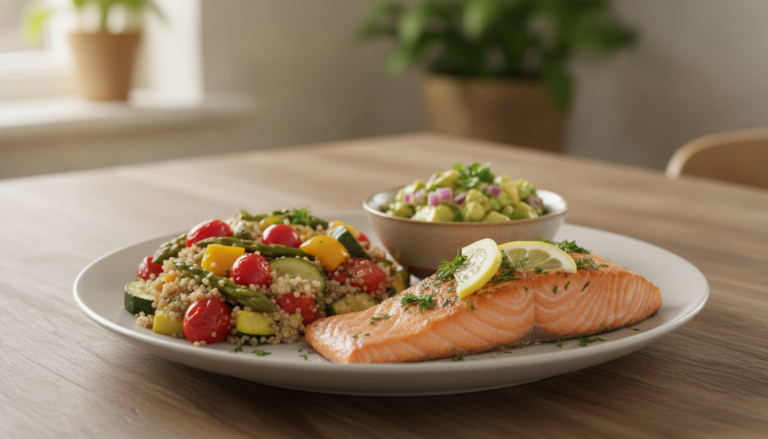
6 Salmon Meal Prep Ideas for Busy Weeks
Salmon meal prep recipes make busy weeks easier when you want healthy, flavorful meals ready ahead of time. These six salmon meal prep ideas combine tender salmon with vegetables, rice, potatoes, grains, and simple sauces for make-ahead lunches and weeknight dinners.
The guide begins with Workweek Lunch’s sheet pan salmon. It serves three people and pairs salmon with sweet potatoes and broccoli. Allow 35–40 minutes of roasting time, plus preparation; the sweet potatoes need a head start before you add the broccoli and salmon.
From garlic butter asparagus to tropical Cajun bowls, these choices bring variety to your week. You can keep the same basic cooking routine while changing the flavors. Make-ahead portions, simple storage, and everyday kitchen tools help each recipe fit a typical American home.
Choose one idea for your next post-work dinner, then build from there.
Key Takeaways
- Explore six salmon meal prep ideas for busy weeks.
- Start with a three-serving sheet pan dish.
- Allow 35–40 minutes of roasting time, plus preparation, for the sheet pan option.
- Use sweet potatoes and broccoli for balance.
- Switch flavors without changing your routine.
- Store portions easily for later in the week.
Why Salmon Meal Prep Recipes Work for Busy Weeks
When your schedule fills up, one cooking session can support several weekday lunches or dinners. A salmon meal prep plan gives you a protein-rich option without starting a new cooking session each evening. Add grains, roasted veggies, or a crisp salad to create a filling meal in minutes.
Benefits of Preparing Ahead
Preparing fish in advance offers variety beyond chicken-based cooking. You can change sauces, grains, and vegetables while keeping the same simple routine. Wild-caught fish also contains astaxanthin, an antioxidant that gives it a deep pink-to-red color. It may provide more vitamins, minerals, and anti-inflammatory benefits than farmed fish, though nutrition varies by source.
How Long Salmon Meals Keep in the Fridge
Refrigerate cooked portions in shallow containers within two hours, or one hour above 90°F (32°C). Keep the fridge at 40°F (4°C) or below and use cooked leftovers within 3–4 days. For assembled mango and avocado bowls, aim for two days for best texture. Label containers with the cooking date. See USDA guidance on leftovers.
- Use grains and vegetables for added fullness.
- Keep sauces separate when possible.
- Reheat gently to protect texture.
Essential Ingredients and Meal Prep Containers
A well-planned grocery list keeps your cooking routine simple. Fresh ingredients and sturdy storage tools help you build balanced portions in minutes. Choose items that cook well together and store safely.
Choosing Fresh or Frozen Salmon
Fresh fillets work well, but frozen salmon offers the same convenience. Thaw it completely in the refrigerator overnight, then pat it dry before baking. This step helps the fish brown instead of steaming. Unlike chicken, it needs only a short cooking time.
Healthy Grains, Vegetables, and Sauces
Use brown rice, quinoa, or cauliflower rice as a base. For a sheet pan, combine one large sweet potato with one large broccoli head, one tablespoon olive oil, one teaspoon cumin, and one teaspoon cinnamon. Asparagus and one cup of halved tomatoes also add color.
Build flavor with garlic, one inch of ginger, one tablespoon soy sauce, salt, and pepper. Use measured oil and water-based sauces to keep ingredients light. Divide grains, vegetables, and fish in sturdy meal prep containers. Separate sauce when possible for better texture.
- Choose leak-resistant containers with secure lids.
- Divide cooked food into shallow containers and refrigerate promptly; do not wait for it to reach room temperature.
- Keep ingredients in separate sections when useful.
Sheet Pan Salmon with Sweet Potatoes and Broccoli
This sheet pan recipe turns fresh ingredients into a balanced meal with little hands-on time. Line the pan with parchment paper for easy cleanup, then preheat oven 400°F.
Ingredients and Preparation
Gather 16 ounces of salmon, cut into three pieces, one large sweet potato, and one large broccoli head. Mix ⅓ cup soy sauce, one tablespoon rice vinegar, and ¼ cup honey. Place the salmon in this sauce while you prepare the veggies.
- Toss sweet potato pieces with one tablespoon olive oil, cumin, cinnamon, salt, and pepper.
- Combine broccoli with one inch of ginger, three minced garlic cloves, one tablespoon soy sauce, salt, and pepper.
- Spread the vegetables on parchment paper, leaving room for the fish.
Roasting Salmon and Vegetables at Four Hundred Degrees
Roast the sweet potato for 20 minutes, then flip the pieces and continue roasting for another 15–20 minutes, until tender. Add the broccoli and salmon for the final 15 minutes of that roasting time. Check the thickest part of the fish with a food thermometer; it should reach 145°F (63°C). If the components finish at different times, remove each as it is ready.
Divide the cooked components among three containers. This simple meal prep option saves time and gives you a ready-to-reheat salmon meal for the week.
Garlic Butter Salmon with Asparagus
Bright lemon, tender asparagus, and a silky butter sauce create an easy low-carb dinner for two or three people. You need just 10 minutes to prepare it and 20 minutes to cook it, making this recipe a practical choice for salmon meal prep.

Making the Lemon Garlic Butter Sauce
Start with one medium fillet cut into three or four chunks and two bunches of asparagus. For the sauce, warm 2 teaspoons of minced garlic in a skillet. Add ½ cup vegetable broth or white wine, ½ stick of butter, and juice from ½ lemon. Season with salt and pepper.
Blanch the asparagus in boiling water for 2–3 minutes, then move it to ice water. Very thin spears can skip this step. Add a little olive oil to the pan, then gently cook the fish until nearly done. Return it to the lemon garlic sauce and finish cooking until the thickest part reaches 145°F (63°C).
- Cook the asparagus and fish with care.
- Cook the salmon to 145°F (63°C), checking the thickest part with a food thermometer.
- Reheat leftovers to 165°F (74°C); microwave time varies with portion size and appliance power.
Cook fish fully before storing it. When reheating, add a little water or sauce and use a microwave-safe cover to help retain moisture.
Tropical Cajun Salmon Bowls
Bring bright color and bold flavor to your weekly menu with four tropical Cajun bowls. Each serving combines spicy fish, sweet mango, creamy avocado, black beans, and a hearty grain.
Building Bowls with Rice, Mango, Avocado, and Black Beans
Coat four skinless fillets with 1 tablespoon oil and 2 tablespoons Cajun seasoning. Place them on parchment paper and roast at 400°F for about 10–12 minutes, checking that the thickest part reaches 145°F (63°C); timing varies with thickness. Divide a 15-ounce can of black beans, two diced mangoes, one avocado, ⅓ cup dried coconut, and 2 cups cooked brown rice or quinoa among four containers.
Mango adds vitamin C, fiber, water, digestive enzymes, and antioxidants. Its natural sweetness balances the savory seasoning.
Preparing the Fresh Lime Dressing
Whisk lime zest, juice from two limes, 2 tablespoons oil, 2 tablespoons maple syrup or raw honey, ¼ teaspoon chili flakes, and salt. Drizzle the sauce over each bowl just before serving.
Using Cauliflower Rice for a Low-Carb Meal
Replace grain with cauliflower for fewer carbohydrates. Keep the beans, avocado, and fish for fiber, healthy fats, and protein. Refrigerate assembled bowls for no more than two days for the best texture.
| Base | Best Feature | Storage Note |
|---|---|---|
| Brown rice | Chewy and filling | Refrigerate up to 2 days |
| Quinoa | Light, nutty flavor | Keep dressing separate |
| Cauliflower rice | Lower-carbohydrate option | Use within 2 days |
More Easy Salmon Meal Prep Recipes to Try
Simple flavor changes can keep your weekday menu fresh. These three options use easy sauces, colorful produce, and practical portions. Each recipe fits a lunch or dinner routine without depending on chicken.

Lemon Dill Salmon Salad
Combine chilled fish with fresh lemon juice, chopped dill, cucumber, celery, and shredded carrots. Add black pepper for a clean finish. Pack the salad beside greens, then serve it cold for a lighter lunch.
Honey Mustard with Roasted Veggies
Whisk honey, mustard, and a little olive oil into a smooth sauce. Spoon it over roasted broccoli, carrots, and bell peppers. Portion the fish and veggies into containers for quick service during the week.
Teriyaki Rice Bowls
Layer cooked rice, steamed vegetables, and a sweet-savory teriyaki sauce in each bowl. Keep the sauce separate until serving to protect texture. This familiar combination adds variety to your meal prep plan.
Prepare one option early in the week and another later. These recipes give you flexible portions in minutes.
| Option | Base | Best Serving Style |
|---|---|---|
| Lemon dill salad | Greens and crunchy vegetables | Chilled lunch |
| Honey mustard | Roasted veggies | Warm dinner |
| Teriyaki bowl | Rice and steamed vegetables | Quick weeknight bowl |
How to Store, Reheat, and Customize Your Salmon Meals
A smart storage routine keeps your weekday food safe, moist, and ready to serve. Cool cooked portions before placing them in airtight meal prep containers. Divide the fish, grains, and veggies evenly, and store sauces separately when practical.
Portioning Meals for the Fridge
Use this timeline to plan your fridge space:
- Tropical Cajun bowls: enjoy within two days.
- Sheet pan portions: keep for up to four days.
- Garlic butter salmon and asparagus: refrigerate promptly and use within 3–4 days.
Label each container with the date. You can switch rice for quinoa or cauliflower rice, add new vegetables, or pair the fish with a different sauce. This flexible method changes the flavor without adding much work.
Reheating Salmon Without Drying It Out
Reheat fish separately from fresh toppings. Add a splash of water, cover with a microwave-safe lid, and heat in short intervals, rotating the container between intervals. Check that the leftovers reach 165°F (74°C) throughout.
Use a food thermometer rather than a fixed reheating time: cooked leftovers should reach 165°F (74°C). See the FoodSafety.gov safe temperature chart.
Conclusion
These salmon recipes give you flexible choices for lunch, dinner, a salad, or a quick bowl during a busy week. The 400°F sheet pan method cooks fish, vegetables, and sweet potatoes together with little effort.
Keep storage times in mind. Eat assembled tropical bowls within two days for best texture. Properly chilled cooked salmon leftovers keep for 3–4 days at 40°F (4°C) or below; freeze portions you will not use in that time.
Rotate lemon dill, honey mustard, teriyaki, garlic butter, and Cajun flavors to maintain variety. Use this information to plan your next post-work dinner, then save the post for later.
Portioned containers, gentle reheating, and flexible ingredients make reliable meal prep simple. With these habits, you can enjoy nourishing food without adding stress to your routine.
FAQ
How long does cooked salmon last in the fridge?
Can you use frozen salmon for these recipes?
What vegetables work best in a sheet pan dinner?
How do you keep salmon from drying out when reheating?
Can you make a low-carb version of a rice bowl?
Should you use parchment paper on the pan?
How much fish should you put in each container?
Can you freeze these recipes?
There are no reviews yet. Be the first one to write one.